




 AJPN Home



Assessing of knowledge, Attitude, and Practice of Sunlight Exposure of Infants among Mothers Attending in Nigest Elleni Mohammed Memorial Comprehensive Specialized Hospital Hossana Ethiopia 2023
Seifu Awgchew Mamo* and Tigest Eneyew Gedamu
Department of Pediatric Nursing, College of Medicine and Health sciences, Wachemo University, Hosanna, Ethiopia
Submission: April 13, 2024; Published: August 27, 2024
*Corresponding author: Seifu Awgchew Mamo, Department of Pediatric Nursing, College of Medicine and Health sciences, Wachemo University, Hosanna, Ethiopia
How to cite this article: Seifu Awgchew M, Tigest Eneyew G. Assessing of knowledge, Attitude, and Practice of Sunlight Exposure of Infants among Mothers Attending in Nigest Elleni Mohammed Memorial Comprehensive Specialized Hospital Hossana Ethiopia 2023. Acad J Ped Neonatol 2024; 14(2): 555940. 10.19080/AJPN.2024.14.555940
Abstract
Background: Sun exposure has the most important benefit: it increases the amount of vitamin D absorbed into your body, also sunlight exposure is the main source of vitamin D. Daily exposure to sunlight remains the cheapest, safest, and most effective method for preventing vitamin-D-related diseases. Objective: To assess knowledge, Attitude, and Practice of Sunlight Exposure of Infants among Mothers Attending in NEMMCSH, Hosanna Town Ethiopia 2023.
Method: Cross-sectional study was conducted among all; mothers of infants visiting NEMMCSH from Nov.1-Dece.30/2023. 252 study participants were selected by using systematic random sampling. KAP of sunlight exposer of infant taken as dependent variable and Age, Sex, Religion, Cultural, Educational status, Occupation, Marital status, sex of infant, and age of infant were independent variables. Data was collected through face-to-face interviews after preparing a structured and pre-tested questionnaire. Data were entered and analysed by using SPSS version 24.
Result: A total of 252 study participants were served with a response rate of 100% of these 107 (42.4%) of them aged between 25-29yrs, 171(67. 9%) of the mothers could read and write. The majority of the respondents 238 (94.4%) knew about sunlight exposure of their infants. Almost all (99.6%) of mothers had a positive attitude towards sunlight exposure. Of the total respondents (90.1%) of mothers believed that sunlight exposure helps to prevent rickets in infants. Most of the respondents 227(90.07%) exposed directly or indirectly of their infants to sunlight. 165 respondents started to expose their child to sunlight between 16 -30 days and More than half of participants (70%) exposed their Children to sunlight.
Conclusion: According to our study, the majority of the respondents (95%) had good knowledge about sunlight exposure of their infants and 98% of respondents had good attitudes. On the other hand, 29.7 % of mothers disagree about the benefit of sunlight exposure to their infant, from these, 49.2% of mothers believe sunlight exposure to infants can cause evil eye.
Keywords: Sunlight; Exposure; Knowledge; NEMMCSH; Vitamin D
Abbreviations: NEMMCSH: Nigest Elleni Mohammed Memorial Comprehensive Specialized Hospital; SLE: Sun Light Exposer; UV- light: Ultraviolet Light
Introduction
Regular exposure to sunlight increases serotonin levels in the body, making the body more alert. Sun exposure has the most important benefit: it increases the amount of vitamin D absorbed into your body, also sunlight exposure is the main source of vitamin D, [1]. Daily exposure to sunlight remains the cheapest, safest, and most effective method for preventing vitamin-D-related diseases. Exposing baby to sunlight early in the morning is a good way to prevent rickets and reduce the problem of vitamin D deficiency and jaundice in newborns, [2].
Sunlight prevents and cures rickets by discovering an inactive lipid in food and skin that is converted into anti-rickets by UV light [3,4]. The benefits of good sun exposure are primarily increased vitamin D introduced into the body. Most cases of V-D deficiency are caused by inadequate exposure to sunlight, the active form of the vitamin, some of which are involved in calcium metabolism and neuromuscular activity of the immune system [5].
On the other hand, Vitamin D deficiency results in growth retardation and skeletal deformities in children, infantile eczema in neonates, and may result in muscle weakness and bone fractures in adults, [6,7]. Rickets is unacceptably high worldwide, with the greatest burden in Africa, the Middle East, and Asia. An estimated one billion people worldwide, across all age groups, have a vitamin D deficiency and almost 50% of the world population lives with Vitamin D insufficiency, [8] Disease related to less awareness of proper sunlight exposure and low knowledge, attitude & practice towards it, is becoming a significant burden to developing children, especially among breastfeeding infants, [9].
In addition, epidemiological studies have revealed that vitamin- D deficiency is highly prevalent among infants in different countries, regardless of age, ethnicity, geographical location, and climatic conditions, and is believed to range from 2.7% to 45% mostly due to inadequate practice of mothers exposed to sunlight which is common mainly in developing countries especially in Sub- Saharan African [7]. World Health Organization report estimates that globally one billion people have vitamin-D deficiency and this burden also increases major disorders of the musculoskeletal system and possibly an increased risk of various autoimmune diseases and cancers [10,11].
In addition, vitamin D deficiency has also a substantial economic burden as much as 25% of health care dollars could be saved just by improving the world’s vitamin D status [12]. Recent studies have shown that vitamin D insufficiency is common in tropical countries even if there is sunshine throughout the year, [13]. Even though a high proportion of sunny weather in Ethiopia the occurrence of rickets is very highly which is 40% is due to mal-practice and inadequate knowledge towards infant’s sunlight exposure and due to broad studies were not conducted to assess the knowledge of mothers on adequate sunlight exposure which contributes to infant mortality and morbidity [14-16].
Ethiopia adopted health education as a strategy to change maternal behavior on infants’ sunlight exposure to prevent rickets in the country during the 1960s, [17]. Implementation of this strategy remains low and inconsistent, and health messages had no focus that positively influences maternal practice and infants not get adequate sunlight, [15]. Lack of sufficient information on the determinant of this risky behavior and the attitude of Ethiopian mothers initiated this study focus on assessing of knowledge, attitude, and practice of sunlight exposure of infants among mothers attending in NEMMCSH in Hosanna town.
Subject and Methods
Study Design
Institution based cross sectional study was conducted; in Nigist Eleni Mohamed Memorial Compressive Specialized Hospital from Nvovemeber1-december30/2023.the hospital is found in hosanna town of hadiya zone. It is a teaching hospital with provides service for more than 1.5 million catchment populations and a total capacity of 250 beds. Also it has 590 health professionals.
Population and Sample
Source Population: All women whose child’s age was less than 1 year and visit NEMMCSH.
Study Population: All women whose child’s age were less than 1 year and visiting NEMMCSH for health care and immunization during the study period.
Sampling Technique: Systematic random sampling method was applied to identify study participants. To get study participants, first the average number of lactating mothers who were visit NEMMCSH was 780, which was obtained by referring a two-month registration report. The kth interval was determined by dividing the total population size by the total sample size, the total sample size of the study was252 so, K= N/n; K= 780/252=3.
Sample Size Determination
To determine the sample sizes required existence of estimated proportion rates is required the proportion of attitude (give highest sample size) toward sunlight exposure was 65% of Jimma University specialized hospital with an absolute precision of ±5% and a statistical contract of 95%, [18].
i. Sample size is computed using the following formula.
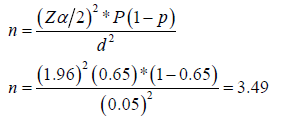
Where, n = sample size; z = statistical certainty chosen; p = estimated proportion level, q=1-p, d = precision desired.
ii. The estimated number of lactating mothers that attend NEMMCSH within two month was 780. Since this figure is below 10,000. Use the following adjustment formula for the sample size:
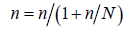
Where, n= sample size for population of size above 10,000
N = number of lactating mothers who attending NEMMCSH.
Substituting the values for each of these variables in the above formula, the sample size was 240.
Taking 5% non-response rate the final sample size was 252.
Study Variables
Independent Variable: Knowledge, attitude, and practice of sunlight exposer of infant.
Dependent Variable: Age, Sex, Religion, Cultural, Educational status, Occupation, Marital status, sex of infant, and age of infant.
Operational Definitions of Variable
Knowledgeable/Good Knowledge: Mothers who got above the median score from the knowledge question were considered as knowledgeable [19].
Good Practice: Participants were deemed to have had good practice if they received a score on the practice questions of greater than or equal to the median [20].
Poor Practice: Mothers scored less than median of the total score of observational checklist criteria [20].
Good Attitude: Mothers who got above the median score from the attitude question were considered as good attitude [21].
Poor Attitude: Mothers who got below the median score from the attitude question were considered as poor attitude, [22].
Data Collection Instrument and Procedure: Data was collected through face-to-face interviews after preparing a structured and pre-tested questionnaire. The questionnaire was initially prepared in English and translated into Amharic and again retranslated back to English to check for any inconsistencies or distortions in the meaning of words and concepts.
Data Quality Control
To ensure the data was maintained through a common understanding of the tool among group members, a pretest was checked for its completeness before actual data collection, Processing, and analysis. Two-day intensive training about tool utilization, ethics, data collection methods, and the study’s purpose was given to data collectors and supervisors.
Data Processing and Analysis
Before and during data processing the information was checked up for completeness, accuracy, clarity and consistency. The data were entered into statistical software Epi-data version 3.1 then the analysis was made with IBM SPSS version 24.0 after exporting the prepared data. Result was presented by using text, table, charts and figures.
Ethical Consideration
Ethical clearance for the commencement of the study was obtained from Wachemo University, research and community service vice president’s office Research Ethical Committee, Permission was also sought and obtained from the ethical committee of Nigest Eleni Mohammed Memorial specialized hospital. Data was kept anonymous by keeping the identity of the neonate’s or mother’s credentials hidden before, during, and after the study.
Result
Socio-Demographic Characteristics of Respondents
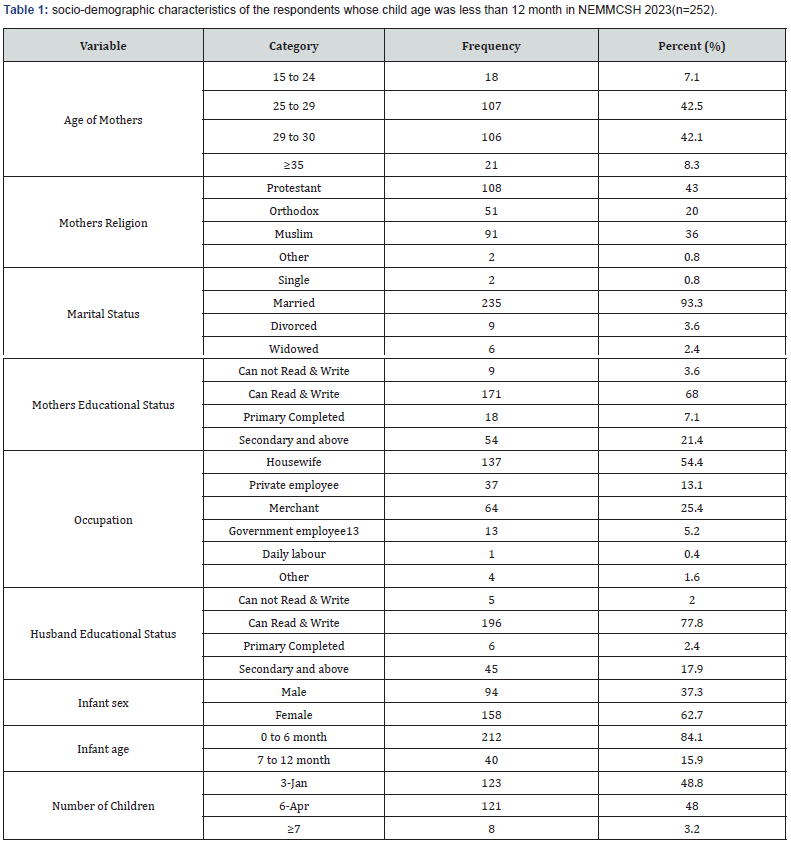
A total of 252 study participants were served with a response rate of 100% of these 107 (42.4%) of them aged between 25- 29yrs, 171(67. 9%) of the mothers could read and write, similarly 196 (77. 9%) of their husbands could also read and write. 158 (62. 7%) of infants were female, and 212 (84. 1%) of infants were aged between 7 and 12 months old (Table 1 ).
Knowledge of the Respondents about Sun Light Exposer of their Infant
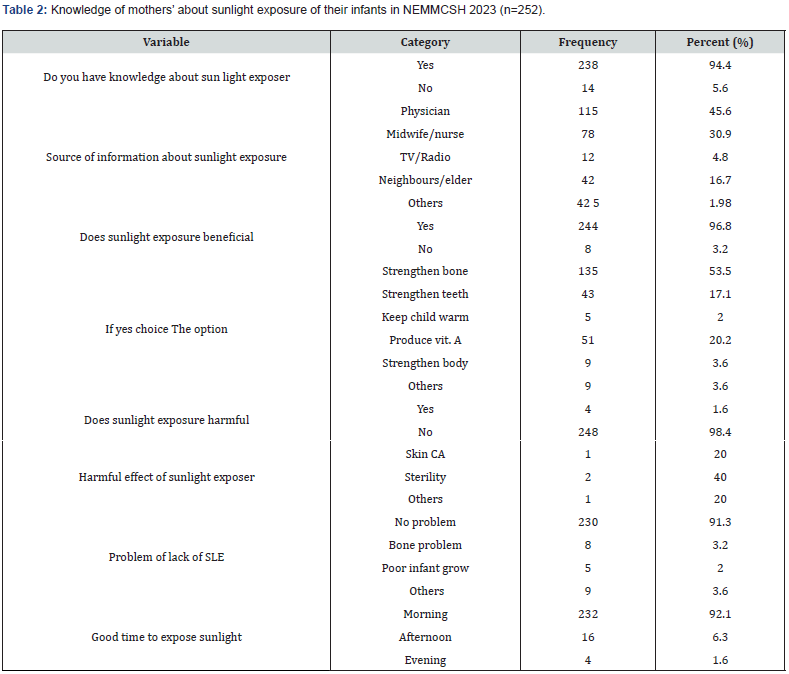
The majority of the respondents 238 (94.4%) knew about sunlight exposure of their infants. Among 252 respondents 232 (92.1%) of them knew of morning is a Good time to expose to sunlight, relatively 247 (98%) of mothers knew the importance of sunlight exposure or said that sunlight was not harmful and 2% of them discussed the harmfulness of sunlight exposure (Table 2).
Attitude of Respondents on Sunlight Exposer of Infants
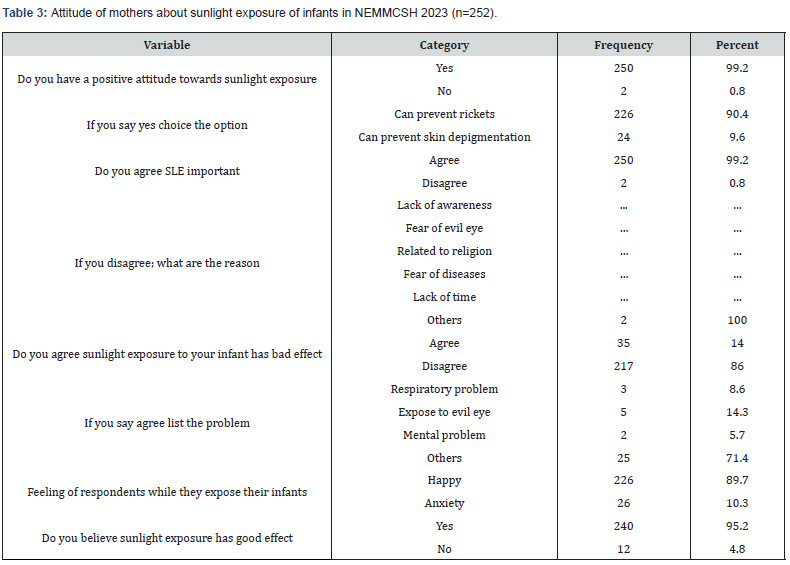
Almost all (99.6%) of mothers had a positive attitude towards sunlight exposure. Of the total respondents (90.1%) of mothers believed that sunlight exposure helps to prevent rickets in infants. On the other hand, mothers who agree with the bad effect of sunlight exposure (14.3%) believed that their children’s sun exposure could cause disease (evil eye) (Table 3).
Practice of Respondents on Sunlight Exposer of Infant
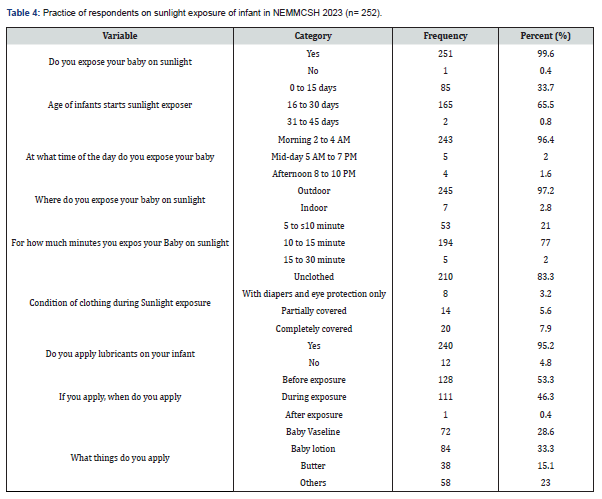
Most of the respondents 227(90.07%) exposed directly or indirectly of their infants to sunlight. 165 respondents started to expose their child to sunlight between 16 -30 days and More than half of participants (70%) exposed their Children to sunlight. The majority 96.4%(243) of mothers exposed their infant between the time range of 2-4 AM and Most, 83.3%of respondents uncovered their infant’s body when they were exposed and the remaining covered their infant’s body during sunlight exposure (Table 4).
Discussion
This study was focused on assessing the knowledge, attitude and practice among mothers of infants in NEMMCSH. In the study 94.4% of mothers of infants had information (knowledge) about infant sunlight exposure; the same study done in England, (Kevin et al., 2020), Showed that 98.6% of the mothers had information about sunlight exposure. So the result of our study is lower than the study done in England the possible reason may be due to educational differences in the study participants and economic and developmental differences between the countries. Also differences in the use of technology.
In our study, 96.8% of the respondents mentioned that “sunlight exposure had benefits this finding was higher than the study done in Farta district of the south Gonder zone [23]. Which was 75.98% the difference may be due to our study’s 94.4% of the mothers had information (knowledge) about sunlight exposer. On the other hand, our result is lower than the study done in Jimma Town, [18].
The percentage of respondents who reported that sunlight exposure was beneficial for strengthening bone was 53.5% this finding was in line with a study done in Jimma and Turkey [18,24]. Regarding the best time for sunlight exposure of infants, 92.1% of the mothers mentioned it was in the morning; also 6.3% of them mentioned in the afternoon and the remaining 1.6% of the respondent in the evening this was similar to the same study done in Aleta wondo, [25]. Which was 90.4% this similarity may be due to the socio-cultural similarity between the study sites and both study areas were found in the same region. On the other hand, the result was higher than the study done in Farta district, [23]. The study findings show that 99.2% of the respondents had a positive attitude to infant sunlight exposure the result was higher than the study done in Debre Tabor Town which was 61% the reason may be due to difference in study population and study area [21] and also feeling of respondents while they exposed their infants to sunlight 89.7% of them were happy and 10.3% of the mother were had anxiety which is higher than study done in Dala woreda south Ethiopia and Farta district the possible reason may be due to socio-natural difference [23,26].
The current study identifies 14% of the mothers perceived sunlight exposure had a bad effect on infants from these 8.6% of them think had a respiratory problem, 14.3% of them thought it was exposure to the evil eye and 5.7% of them thought it may cause a mental problem this result lower than a similar study conducted in Debre-Tabor Twon [21]. Regarding the practice of sunlight, exposer 99.6% of the mothers exposed their infant to sunlight this finding was in line with the study done in Dessie Town which was 93.9% but higher than the study done in Yergalem( 84%) respectively [1,27].
In this study 65.5% of the respondents started to expose their infant to sunlight between 16-30 days the result was higher than the study done in Debre-Berehan, Dessie and Yergalem which was 12.6%, 19.3% and 25.6% respectively, [1,27,28]. This discrepancy may be due to participants source of information in our study 76.5% of respondents were got information from health professionals.
In our study, 96.4% of the respondents exposed their infant to sunlight in the morning before 4 am this result was in line with studies conducted in Debre-Markos, Debre-Berhan and Dessie which was 99.1%, 97% and 93.4% respectively, [20,27,28]. This may be due to near similar topography of the study area.
The findings of this study show that 83.3% of the mothers unclosed their infants when they were exposed to sunlight the results from Metu oromia, Debre-markose, Debre-Berhan and Dessie were lower than when we compared with this finding [20,27-29].
On the other hand, 95.2% of the respondents applied lubricant or lotion during sunning their infant, the result was in line with a study done in Metu Oromia, [29]. This implies that it is crucial to increase the awareness of communities regarding the appropriate practice of sunning infants for optimal cutaneous vitamin D production. As a limitation Owing to a lack of funding and resources, all medical facilities were no included to the study, which could have decreased the study’s accuracy and the mother did not exhibit any conduct, and the information was self-reported. Also owing to the nature of descriptive research, qualitative study design is preferable.
According to our study, the majority of the respondents (95%) had good knowledge about sunlight exposure of their infants and 98% of respondents had good attitudes. On the other hand, 29.7 % of mothers disagree about the benefit of sunlight exposure to their infant, from these, 49.2% of mothers believe sunlight exposure to infants can cause evil eye. Therefore, health education focusing on the importance of sunlight exposure is important to improve knowledge, practice, and attitude of mothers’ sunlight exposure of their infants.
Authors’ Contributions
All authors collaboratively made substantial contributions to conception and design, acquisition of data, or analysis and interpretation of data; took part in drafting the article or revising it critically for important intellectual content; gave final approval of the version to be published; and agree to be accountable for all aspects of the work.
References
- Bezabih AS, Eshetu D, Yohanis N, Hirigo AT (2021) Knowledge and Practice of Infants Exposure to Sunlight among Lactating Mothers Attending at Yirgalem Hospital, Sidama Regional State. Clin Med Insights Pediatr 15: 11795565211041348.
- Addisu Seneshaw B, Daniel E, Nigussie Y, Agete Tadewos H (2021) Knowledge and Practice of Infants Exposure to Sunlight Among Lactating Mothers Attending at Yirgalem Hospital, Sidama Regional State. Clin Med Insights Pediatr 15: 11795565211041348.
- Girma Teferi M, Ayana Benti T, Tolesa Gemeda G, Bizunesh Kefale M (2022) Factors associated with infants’ sunlight exposure among mothers attending the EPI unit of Wolkite University Specialized Hospital. Plos One 17(11): e0277349.
- Michel FH (2008) Vitamin D and sunlight strategies for cancer prevention and other health benefits. Clin J Am Soc Nephrol 3(5): 1548-54.
- Eyasu Alem L, Birhanu Wondimeneh D, Natneal Atnafu G, Gedion Asnake A, Kelemu Abebe G, et al. (2022) Knowledge and practice of mothers towards sunshine exposure of their children in Ethiopia: A Systematic Review and Meta-Analysis. BMC Pediatr 22(1): 213.
- Tom DT, Philip RF, Mark AS, John MP (2006) Nutritional rickets around the world: causes and future directions. Ann Trop Paediatr 26(1): 1-16.
- Anne Prentice (2008) Vitamin-D deficiency: a global perspective. Nutritional review. Nutr Rev 66(10 Suppl 2): S153-S164.
- Oyatsi DP, Musok RN, Wassuna AO (1999) Incidence of rickets of prematurity at Kenyatta National Hospital, Nairobi. East Far Med 76(2): 63-66.
- Stefan P, Armin Z, Rima Obeid, Andreas H, Pawel P, et al. (2018) The role of vitamin-D infertility and during pregnancy and lactation: A Review of Clinical Data. Int J Environ Res Public Health 15(10): 2241.
- Nathaniel M (2008) health Benefits of Sunlight: A Bright Spot for Human Health. Environ Health Perspect 116(4): A160-A167.
- Susanna S, Carsten SH, Ulla Kristine M, Lene H, Peter V, et al. (2018) Vitamin D content in human breast milk: a 9-mo follow-up study. Am J Clin Nutr 103(1): 107-14.
- Shanna Nesby-O, Kelley SS, Mary EC, Cathleen G, Bruce WH, et al. (2002) Hypovitaminosis D prevalence and determinants among African American and white women of reproductive age: third National Health and Nutrition Examination, Survey. Am J Clin Nutr 76(1): 187-192.
- Kifle W, Negalign B (2011) Magnitude and Pattern of Injury in Jimma University Specialized Hospital, South West Ethiopia. Ethopia J Health Sci 21(3): 155-65.
- Amare B, Abebaw M, Bayachew A, Yidersal H, Habtamu T (2022) Practice of Sunlight Exposure of Infants and Associated F actors Among Infant Coupled Mothers at Dejen District, Amhara Region, Northwest Ethiopia 2021. Nutr Metab Insights 15: 11786388221106983.
- Mahenra Kumar T, Taneja Vivek (2012) Role of vitamin D in Prevention of deafness. Indian Institute of Ear Diseases 18(2): 55-57.
- Hoosick MH (2007) Vitamin D deficiency. Eng J Med.
- Mona S Calvo , Susan J Whiting, Curtis N Barton (2005) Vitamin D intake: a global perspective of current status. J Nutr 135(2): 310-316.
- Tesfaye G, Afework A, Zerihun T (2017) Rickets and the knowledge and practice of exposure to sunlight in Jimma town. Ethopia J Health Develop 12(1).
- Ankur KJ, Aman G, Keshavamurthy V, Anuradha B (2020) Sun Exposure in Children: Balancing the Benefits and Harms. Indian Dermatol Online J 11(1): 94-98.
- Abebe A, Rajalakshmi M, Tenaw G (2016) Assessment of practice and factors affecting sunlight exposure of infants among mothers attending governmental health facilities in debre markos town, East gojjam, Ethiopia, 2015.
- Getahun Dejen, Mesfine E, Meket G (2018) Assessment of Knowledge, Attitude And Practice Of Mothers on The Effects of Sunlight Exposure and Its Associated Factors Among Infants Found Debre Tabor Town, North Central Ethiopia, 2015. Am J Nurs Sci 5(1): 3036.
- Kevin B, Lesley ER, Ann RW (2020) Public Awareness and Behavior in Great Britain in the Context of Sunlight Exposure and Vitamin D: Results from the First Large-Scale and Representative Survey. Int J Environ Res Public Health 17(18): 6924.
- Gedamu H, Yelekal T (2018) Assessment of Knowledge, Attitude, and Practice of Sunlight Exposure of Infants among Mothers Attending in Governmental Health Facilities in Farta District, South Gondar Zone, North West Ethiopia, 2018. Int J Reprod Med 2019: 2638190.
- Wahl DA, Cooper C, Ebeling PR, Eggersdorfer M, Hilger J, et al. (2012) A global representation of vitamin D status in healthy populations. Arch Osteoporos 7: 155-172.
- Asres B, Melese G, Bedilu D, Mohammed A, Bereket D (2019) Knowledge and practice on adequate sunlight exposure of infants among mothers attending EPI unit of Aleta Wondo Health Center SNNPR, Ethiopia. BMC Res Notes 12(1): 183.
- Feven Tezera D, Susan JW, Samson G (2017) Dietary calcium, intake and sunlight exposure among children aged 6-23 months in Dale Woreda, Southern Ethiopia.
- Debrnesh G, Gebeyaw B, Zinet A, Endalk B, Sisay G (2023) Knowledge, Practice, and Factors Affecting Sunlight Expo sure of Infants Among Mothers at Governmental Health Facilities in Dessie Town, Ethiopia 2021. Clin Med Insights Pediatr 17: 11795565221148329.
- Wegayehu Zeneb T, Leul Deribe K, Tewodros T, Abebe M, Michael Amera T, et al. (2021) Assessment of Practice and Factors associated with Sunlight Exposure of Infants among Mothers in, Debre, Berhan, Town, North, Shewa, Zone, Amhara, Region, Ethiopia. Pediatr Health Med Ther 12: 507-517.
- Askalemariam T, Solomon Y, Abdi Geda G (2023) Knowledge and practice of infant exposure to sunlight among mothers in the rural villages of Mettu district, southwest Ethiopia. Front Public Health 11: 1166976.

























